


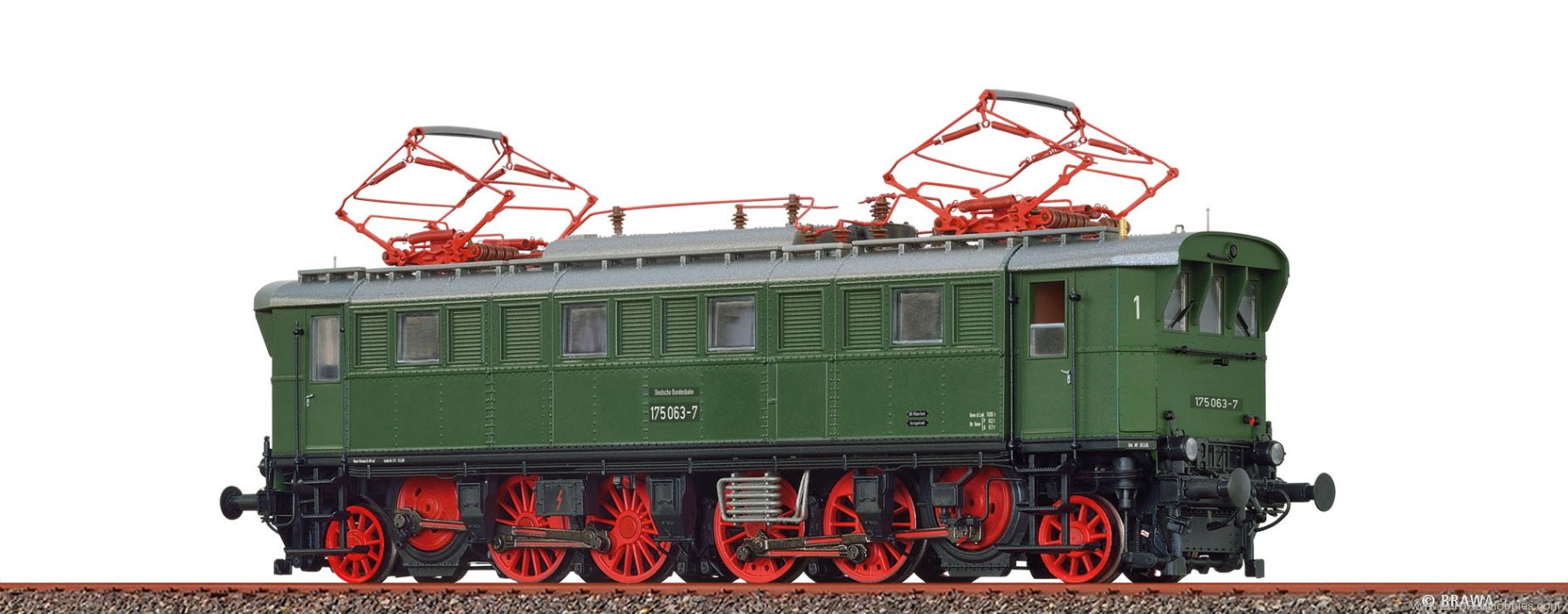
In 1926, DRG ordered further electric locomotives as improvements on the E77 for operation in the southern and central German network. While the electrical systems remained virtually unchanged, a new, one-part vehicle frame was designed with the axle sequence 1'BB1'. The locomotive body was similar to the E061 range. Due to the running gear changes, the maximum permissible speed was set at 70 km/h, raising hopes of better utility in mixed passenger and goods train schedules. 79 locomotives were planned. E75 01-12 went to south Germany, while the E75 51-69 went to Leipzig West, Wahren, Bitterfeld and Magdeburg-Buckau. As in 1943 all the E75's in service in central Germany were exchanged for E77 and transferred to Bavaria, almost all the E75 remained in the western occupation zones. After 1945 at SBZ, E75 07 and 58 were registered at Weißenfels railway depot; at least one of the two was requisitioned as a reparation payment and later bought back. After decommissioning wardamaged locomotives, DB owned 22 engines which were used in mixed service in the south German network. Three locomotives were modernised from 1960 and were fitted among other things with rubber-mounted front windows. From 1968, the remaining 19 traction units were redesignated BR 175.


Mon-Fri:


